Order of Dante Alighieri Books
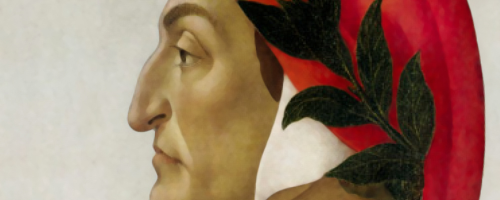
Dante Alighieri (1265–1321) was an Italian poet, philosopher, and political thinker best known for writing The Divine Comedy, the epic narrative poem that helped shape the foundations of modern Italian literature. His work blends medieval theology, classical influence, and deeply personal reflection, charting a visionary journey through Hell, Purgatory, and Paradise. Dante’s fusion of allegory, moral inquiry, and poetic innovation has made him one of the central figures of the Western literary canon.
Dante Alighieri completed the first part of The Divine Comedy – Inferno – around 1314, with the full poem finished shortly before his death. Below is a list of Dante Alighieri’s major works in order of when they were originally released:
Publication Order of Poetry Books
| The Divine Comedy | (1320) | Description / Buy at Amazon.com |
| Circles of Hell | (1320) | Description / Buy at Amazon.com |
| Rime | (1400) | Description / Buy at Amazon.com |
| Eclogues | (1719) | Description / Buy at Amazon.com |
Publication Order of Collections
| Vita Nuova | (1292) | Description / Buy at Amazon.com |
| Convivio | (1307) | Description / Buy at Amazon.com |
Publication Order of Non-Fiction Books
| De Vulgari Eloquentia: Dante's Book of Exile | (1305) | Description / Buy at Amazon.com |
| The De Monarchia | (1313) | Description / Buy at Amazon.com |
Publication Order of La Divina Commedia Books
| Inferno | (1320) | Description / Buy at Amazon.com |
| Purgatorio | (1320) | Description / Buy at Amazon.com |
| Paradiso | (1320) | Description / Buy at Amazon.com |
Publication Order of Anthologies
If You Like Dante Alighieri Books, You’ll Love…
Dante Alighieri Synopses: Inferno by Dante Alighieri plunges readers into a harrowing descent through the darkest circles of Hell. More than six centuries after it was written, Dante Alighieri’s vision remains as urgent and resonant as ever – one of the defining masterpieces of Western literature.
Belonging in the company of Homer, Virgil, Milton, and Shakespeare, Inferno is both a sweeping theological epic and an intensely human drama. It charts a visionary journey through eternal torment while also serving as a profound meditation on justice, morality, and the divine order. Born from Dante’s own anguish at the corruption and political turmoil of his age, the poem is at once personal and fiercely political.
Few works have enjoyed such immediate and enduring fame. Inferno confronts universal questions – good and evil, free will and fate – while revealing how the failures of humankind can distort the world. Its power has not dimmed across the centuries.
After brilliantly capturing the sense of loss and linguistic intensity in Inferno, Jason Baxter turns his attention to the fugue‑like beauty of Purgatorio. His translation balances the poem’s soaring, classical lyricism with its moments of humility and earthbound emotion – those bodily, devotional experiences so characteristic of late medieval art.
In doing so, Baxter offers modern readers not only a faithful rendering of Dante’s Italian but an immersive encounter with the sensations, revelations, and moral awakenings that shaped the journey for Dante’s earliest audience. This second canticle of The Divine Comedy becomes, in Baxter’s hands, a vivid exploration of inner transformation and the profound moral education at the heart of Dante’s vision.
Paradiso is the third and final part of Dante’s Divine Comedy, the epic poem widely regarded as one of the greatest achievements in world literature. Picking up after the events of Inferno and Purgatorio, this concluding canticle follows Dante’s ascent through Paradise. He travels through the nine celestial spheres of Heaven before reaching the Empyrean, the dwelling place of God.
Guided by Beatrice, the embodiment of divine wisdom, Dante encounters figures such as Thomas Aquinas, King Solomon, and Constantine the Great. Their presence becomes a catalyst for exploring the nature of virtue, divine love, and spiritual understanding, offering a luminous and hopeful resolution to a journey that began in darkness.
Often overshadowed by the more famous Inferno, Paradiso is equally captivating in its vision and philosophical depth. Henry Wadsworth Longfellow’s English translation invites readers into Dante’s radiant depiction of the afterlife while preserving the richness and nuance of the Italian original.