Order of Friedrich Nietzsche Books
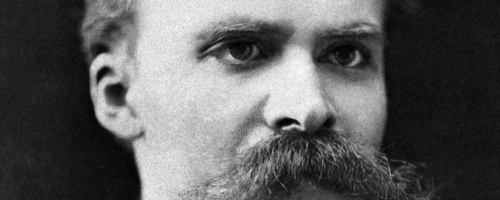
Friedrich Nietzsche (1844–1900) was a German philosopher, cultural critic, and philologist. His writing blends aphorism, polemic, and poetic intensity, challenging inherited values and proposing concepts such as the will to power, eternal recurrence, and the revaluation of all morals. Nietzsche’s influence spans philosophy, literature, psychology, and political theory, with works like Thus Spoke Zarathustra and Beyond Good and Evil remaining central to debates about modernity and individual agency.
Friedrich Nietzsche made his debut as an author in 1871 with The Birth of Tragedy. Below is a list of Friedrich Nietzsche’s major works in order of when they were originally released:
Publication Order of The Complete Works of Friedrich Nietzsche Books
| The Birth of Tragedy | (1871) | Description / Buy at Amazon.com |
| Early Greek Philosophy & Other Essays | (1872) | Description / Buy at Amazon.com |
| On the Future of our Educational Institutions | (1873) | Description / Buy at Amazon.com |
| Thoughts Out of Season | (1874) | Description / Buy at Amazon.com |
| Human, All Too Human | (1875) | Description / Buy at Amazon.com |
| The Case of Wagner-Nietzsche, Contra Wagner, Selected Aphorisms | (1876) | Description / Buy at Amazon.com |
| The Dawn of Day | (1881) | Description / Buy at Amazon.com |
| The Joyful Wisdom | (1882) | Description / Buy at Amazon.com |
| Thus Spoke Zarathustra | (1883) | Description / Buy at Amazon.com |
| Beyond Good and Evil | (1883) | Description / Buy at Amazon.com |
| The Genealogy of Morals | (1884) | Description / Buy at Amazon.com |
| The Will to Power | (1885) | Description / Buy at Amazon.com |
| The Twilight of the Idols and the Anti-Christ | (1886) | Description / Buy at Amazon.com |
| Ecce Homo | (1888) | Description / Buy at Amazon.com |
| The Antichrist | (1895) | Description / Buy at Amazon.com |
| Index to Nietzsche | (2008) | Description / Buy at Amazon.com |
| God Is Dead. God Remains Dead. And We Have Killed Him. | (2021) | Description / Buy at Amazon.com |
Publication Order of Cambridge Texts in the History of Philosophy Books
| Summa Theologiae / Questions on God | (1273) | Description / Buy at Amazon.com | ||
| Cause, Principle and Unity and Essays on Magic | (1583) | Description / Buy at Amazon.com | ||
| Francis Bacon: The New Organon | (1620) | Description / Buy at Amazon.com | ||
| Descartes: Meditations on First Philosophy | (1641) | Description / Buy at Amazon.com | ||
| Antoine Arnauld and Pierre Nicole: Logic or the Art of Thinking | (1662) | Description / Buy at Amazon.com | ||
| Observations Upon Experimental Philosophy | (1668) | Description / Buy at Amazon.com | ||
| Tractatus Theologico-Politicus: Gebhardt Edition | (1670) | Description / Buy at Amazon.com | ||
| The Search after Truth | (1675) | Description / Buy at Amazon.com | ||
| Spinoza: Ethics: Proved in Geometrical Order | (1677) | Description / Buy at Amazon.com | ||
| Malebranche: Dialogues on Metaphysics and on Religion | (1688) | Description / Buy at Amazon.com | ||
| Locke on Toleration | (1689) | Description / Buy at Amazon.com | ||
| Berkeley: Philosophical Writings | (1709) | Description / Buy at Amazon.com | ||
| Shaftesbury: Characteristics of Men, Manners, Opinions, Times | (1711) | Description / Buy at Amazon.com | ||
| A Treatise Concerning Eternal and Immutable Morality: With a Treatise of Freewill | (1731) | Description / Buy at Amazon.com | ||
| Hume: An Enquiry Concerning Human Understanding | (1748) | Description / Buy at Amazon.com | ||
| The Theory of Moral Sentiments | (1759) | Description / Buy at Amazon.com | ||
| Anthropology from a Pragmatic Point of View | (1785) | Description / Buy at Amazon.com | ||
| Groundwork of the Metaphysics of Morals | (1785) | Description / Buy at Amazon.com | ||
| Metaphysical Foundations of Natural Science | (1786) | Description / Buy at Amazon.com | ||
| Critique of Practical Reason | (1788) | Description / Buy at Amazon.com | ||
| Attempt at a Critique of All Revelation | (1792) | Description / Buy at Amazon.com | ||
| Religion within the Limits of Reason Alone | (1793) | Description / Buy at Amazon.com | ||
| Novalis: Fichte Studies | (1796) | Description / Buy at Amazon.com | ||
| Foundations of Natural Right | (1797) | Description / Buy at Amazon.com | ||
| The Metaphysics of Morals | (1797) | Description / Buy at Amazon.com | ||
| Kant: Political Writings | (1797) | Description / Buy at Amazon.com | ||
| The System of Ethics | (1798) | Description / Buy at Amazon.com | ||
| Schleiermacher: On Religion: Speeches to its Cultured Despisers | (1799) | Description / Buy at Amazon.com | ||
| Hamann: Writings on Philosophy and Language: Risk Factors and Strategies for Prevention | (1825) | Description / Buy at Amazon.com | ||
| On the History of Religion and Philosophy in Germany and Other Writings | (1835) | Description / Buy at Amazon.com | ||
| On Language: On the Diversity of Human Language Construction and its Influence on the Mental Development of the Human Species | (1836) | Description / Buy at Amazon.com | ||
| Fear and Trembling | (1843) | Description / Buy at Amazon.com | ||
| Untimely Meditations | (1876) | Description / Buy at Amazon.com | ||
| Daybreak | (1881) | Description / Buy at Amazon.com | ||
| The Gay Science | (1882) | Description / Buy at Amazon.com | ||
| Thus Spoke Zarathustra | (1883) | Description / Buy at Amazon.com | ||
| Nietzsche: Beyond Good and Evil: Prelude to a Philosophy of the Future | (1886) | Description / Buy at Amazon.com | ||
| The Principles of the Most Ancient and Modern Philosophy | (1982) | Description / Buy at Amazon.com | ||
| Orations on Philosophy and Education | (1989) | Description / Buy at Amazon.com | ||
| Hobbes and Bramhall on Liberty and Necessity | (1995) | Description / Buy at Amazon.com | ||
| La Mettrie: Machine Man and Other Writings | (1996) | Description / Buy at Amazon.com | ||
| Machine Man and Other Writings | (1996) | Description / Buy at Amazon.com | ||
| On Religion: Speeches to its Cultured Despisers | (1996) | Description / Buy at Amazon.com | ||
| Logic or the Art of Thinking | (1996) | Description / Buy at Amazon.com | ||
| A Free Enquiry Into the Vulgarly Received Notion of Nature | (1996) | Description / Buy at Amazon.com | ||
| Philosophical Writings | (1997) | Description / Buy at Amazon.com | ||
| Moses Mendelssohn: Philosophical Writings | (1997) | Description / Buy at Amazon.com | ||
| The World and Other Writings | (1998) | Description / Buy at Amazon.com | ||
| Herder: Philosophical Writings | (1998) | Description / Buy at Amazon.com | ||
| Schleiermacher: Hermeneutics and Criticism: And Other Writings | (1998) | Description / Buy at Amazon.com | ||
| Hermeneutics and Criticism and Other Writings | (1998) | Description / Buy at Amazon.com | ||
| Cause, Principle and Unity: And Essays on Magic | (1998) | Description / Buy at Amazon.com | ||
| The Birth of Tragedy and Other Writings | (1999) | Description / Buy at Amazon.com | ||
| Disputed Questions on the Virtues | (1999) | Description / Buy at Amazon.com | ||
| The New Organon | (2000) | Description / Buy at Amazon.com | ||
| Nicomachean Ethics | (2000) | Description / Buy at Amazon.com | ||
| Outlines of Scepticism | (2000) | Description / Buy at Amazon.com | ||
| Treatise on Tolerance and Other Writings | (2000) | Description / Buy at Amazon.com | ||
| Philosophical & Theological Writings | (2001) | Description / Buy at Amazon.com | ||
| Nietzsche: The Anti-Christ, Ecce Homo, Twilight of the Idols: And Other Writings | (2001) | Description / Buy at Amazon.com | ||
| On Moral Ends | (2001) | Description / Buy at Amazon.com | ||
| Essay on the Origin of Human Knowledge | (2001) | Description / Buy at Amazon.com | ||
| Schleiermacher: Lectures on Philosophical Ethics | (2002) | Description / Buy at Amazon.com | ||
| On the Trinity | (2002) | Description / Buy at Amazon.com | ||
| Classic and Romantic German Aesthetics | (2002) | Description / Buy at Amazon.com | ||
| Lectures on Philosophical Ethics | (2002) | Description / Buy at Amazon.com | ||
| Writings from the Early Notebooks | (2003) | Description / Buy at Amazon.com | ||
| Writings from the Late Notebooks | (2003) | Description / Buy at Amazon.com | ||
| Fichte Studies | (2003) | Description / Buy at Amazon.com | ||
| Isaac Newton: Philosophical Writings | (2004) | Description / Buy at Amazon.com | ||
| Prolegomena to Any Future Metaphysics, with Selections from the Critique of Pure Reason | (2004) | Description / Buy at Amazon.com | ||
| Prolegomena to any Future Metaphysics: With Selections from the Critique of Pure Reason | (2004) | Description / Buy at Amazon.com | ||
| Characteristics of Men, Manners, Opinions, Times | (2004) | Description / Buy at Amazon.com | ||
| Reinhold: Letters on the Kantian Philosophy | (2005) | Description / Buy at Amazon.com | ||
| Medieval Islamic Philosophical Writings | (2005) | Description / Buy at Amazon.com | ||
| Sextus Empiricus: Against the Logicians | (2005) | Description / Buy at Amazon.com | ||
| Against the Logicians | (2005) | Description / Buy at Amazon.com | ||
| Letters on the Kantian Philosophy | (2006) | Description / Buy at Amazon.com | ||
| Augustine: On the Free Choice of the Will, On Grace and Free Choice, and Other Writings | (2006) | Description / Buy at Amazon.com | ||
| Medieval Jewish Philosophical Writings | (2007) | Description / Buy at Amazon.com | ||
| Hume: Dialogues Concerning Natural Religion: And Other Writings | (2007) | Description / Buy at Amazon.com | ||
| Theological-Political Treatise | (2007) | Description / Buy at Amazon.com | ||
| Writings on Philosophy and Language | (2007) | Description / Buy at Amazon.com | ||
| Plato: The Symposium | (2008) | Description / Buy at Amazon.com | ||
| Greek and Roman Aesthetics | (2010) | Description / Buy at Amazon.com | ||
| Kant: Observations on the Feeling of the Beautiful and Sublime and Other Writings | (2011) | Description / Buy at Amazon.com | ||
| Observations on the Feeling of the Beautiful and Sublime and Other Writings | (2011) | Description / Buy at Amazon.com | ||
| Eudemian Ethics | (2012) | Description / Buy at Amazon.com | ||
| Aristotle: Nicomachean Ethics | (2014) | Description / Buy at Amazon.com | ||
| Theaetetus/Sophist | (2015) | Description / Buy at Amazon.com | ||
| Meditations on First Philosophy, with Selections from the Objections and Replies | (2017) | Description / Buy at Amazon.com | ||
| Religion within the Boundaries of Mere Reason, and Other Writings | (2018) | Description / Buy at Amazon.com | ||
| Ethics: Proved in Geometrical Order | (2018) | Description / Buy at Amazon.com | ||
+ Show All Books in this Series | ||||
Publication Order of Portable Library Books
| The Portable Cervantes | (1976) | Description / Buy at Amazon.com | ||
| The Portable Nietzsche | (1977) | Description / Buy at Amazon.com | ||
| The Portable Roman Reader | (1977) | Description / Buy at Amazon.com | ||
| The Portable Medieval Reader | (1977) | Description / Buy at Amazon.com | ||
| The Portable Chaucer: Revised Edition | (1977) | Description / Buy at Amazon.com | ||
| The Portable Thomas Jefferson | (1977) | Description / Buy at Amazon.com | ||
| The Portable Machiavelli | (1979) | Description / Buy at Amazon.com | ||
| The Portable Emerson: New Edition | (1981) | Description / Buy at Amazon.com | ||
| The Portable American Realism Reader | (1997) | Description / Buy at Amazon.com | ||
| The Portable Edmund Burke | (1999) | Description / Buy at Amazon.com | ||
+ Show All Books in this Series | ||||
If You Like Friedrich Nietzsche Books, You’ll Love…
- Fyodor Dostoevsky
- D.H. Lawrence
- Jean‑Paul Sartre
Friedrich Nietzsche Synopses: The Birth of Tragedy: Out of the Spirit of Music is Friedrich Nietzsche’s first major work, a study that investigates how ancient Greek tragedy developed and what this reveals about the purpose of art in human life. Bringing together ideas from philosophy, philology, and cultural criticism, the book introduces concepts that would later become central to his thought.
Nietzsche describes artistic creation through the meeting of two forces: the Apollonian, associated with clarity, structure, and restraint, and the Dionysian, associated with passion, intensity, and ecstatic dissolution. He argues that the most powerful works of art arise when these impulses interact in productive tension. Through his examination of Greek drama, myth, and music, he presents creativity as a force capable of affirming life even in the presence of suffering.
Still widely read by students of philosophy, literature, and aesthetics, The Birth of Tragedy remains a searching reflection on culture and the human condition. Its blend of poetic speculation and bold argument continues to shape modern discussions of art and meaning.
Human, All Too Human: A Book for Free Spirits marks a turning point in Friedrich Nietzsche’s intellectual development, signaling his move away from romanticism toward a sharper, more analytical view of human life. Presented as a series of aphorisms, the book examines the forces that shape human behavior and exposes the fragile assumptions behind ideas of truth, morality, and personal identity.
Nietzsche subjects social conventions, religious belief, and artistic tradition to a rigorous critique, urging readers to cultivate independence of mind and a willingness to question inherited values. Through concise and often provocative reflections, he highlights the resilience of the individual spirit as it confronts the intricate and often contradictory nature of human existence.
Human, All Too Human stands as a testament to Nietzsche’s emerging commitment to intellectual clarity and free inquiry, offering a challenging yet invigorating exploration of what it means to think beyond established boundaries.
The Antichrist is one of Friedrich Nietzsche’s most forceful assaults on Christian morality, a work often regarded as his most uncompromising critique of religious belief and ethical tradition. The essay bristles with fierce argument, biting rhetoric, and deliberate provocation, creating a style that many readers find both arresting and unsettling. Nietzsche writes with speed and precision, cutting directly to his points with a voice steeped in irony and scorn. The book opens with the declaration that it is intended only for a select few, setting the tone for the radical challenge that follows.
Nietzsche himself remains one of the most influential and contested thinkers of the nineteenth century. Over the course of his life he produced nineteen published manuscripts, each contributing to the philosophical legacy that continues to shape modern thought. Among these works, The Antichrist stands out for its intensity and its willingness to confront the foundations of Western morality. Although written in 1888, the book did not appear in print until 1895, its publication delayed by the controversy surrounding its subject matter and its uncompromising stance.
The Antichrist endures as a stark and provocative entry point into Nietzsche’s late philosophy, offering a concentrated expression of his critique of religion, culture, and moral values.